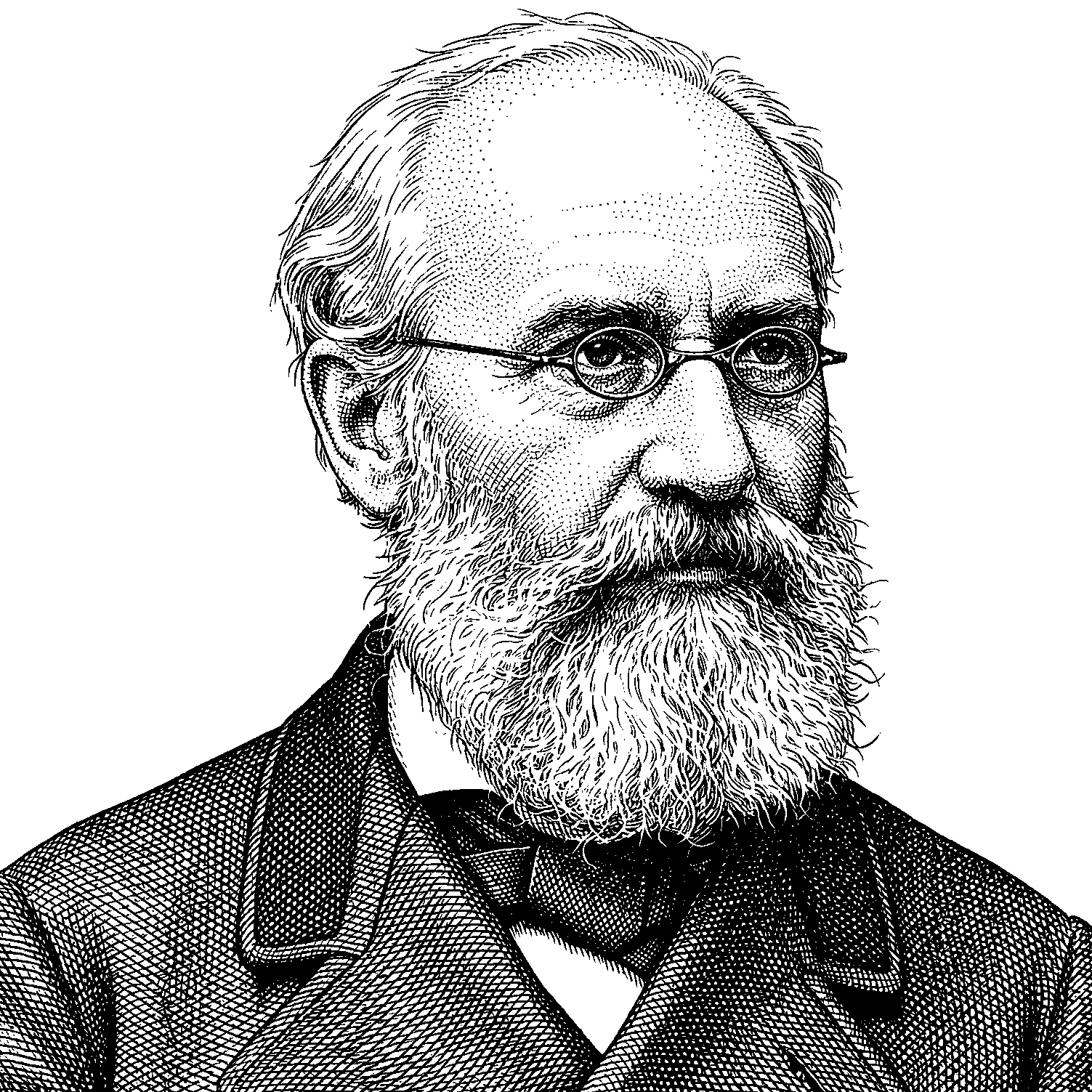
Nikolay Fyodorovich Fyodorov (9 June 1829 – 28 December 1903) was a Russian Orthodox Christian philosopher, religious thinker, and futurologist who founded the intellectual movement known as Russian cosmism—a direct precursor to modern transhumanism. Born as Nikolay Pavlovich Gagarin, the illegitimate son of Prince Pavel Ivanovich Gagarin, he studied at the Richelieu Lyceum in Odessa before serving as a teacher and later joining the Rumyantsev Museum as a librarian in 1878.
Called the “Socrates of Moscow,” Fyodorov was respected and admired by Leo Tolstoy, Fyodor Dostoevsky, and Vladimir Solovyov. His major contribution to philosophy was the “Common Task”—humanity’s collective mission to regulate the forces of nature, defeat death, and resurrect ancestors through scientific means. He advocated for radical life extension, physical immortality, and the literal resurrection of the dead, insisting that knowledge without action was worthless.
Fyodorov opposed intellectual property and never published during his lifetime. His selected articles were printed posthumously as Philosophy of the Common Task (also known as Philosophy of Physical Resurrection). His ideas influenced diverse figures, from rocket pioneer Konstantin Tsiolkovsky to composer Alexander Scriabin. He died of pneumonia in 1903 in a shelter for the poor; his grave was destroyed by the Soviet government in 1930.
Fyodorov’s synthesis of Orthodox Christianity with scientific ambition for immortality and resurrection makes him a foundational figure for understanding the religious dimensions of transhumanist thought.