
Authors

Bryan Johnson
Bryan Johnson (born 22 August 1977) is an American entrepreneur, venture capitalist, and longevity researcher whose work explores the technological transformation of human biology. Born in Provo, Utah, and raised in nearby Springville, he served a Latter-day Saint mission in Ecuador before earning a degree from Brigham Young University and an MBA from the University of Chicago. In 2007, Johnson founded Braintree, a mobile and web payment platform that powered services like Uber and Airbnb. In 2012, Braintree acquired Venmo for $26.2 million, and in 2013, PayPal acquired Braintree for $800 million, earning Johnson over $300 million. He subsequently invested $100 million of his personal capital in the OS Fund, supporting transformative science startups in synthetic biology, artificial intelligence, and space exploration. In 2016, Johnson founded Kernel, investing another $100 million to develop non-invasive neural interface technologies for measuring brain activity. In 2021, he launched Project Blueprint—a comprehensive anti-aging protocol involving strict nutrition, supplements, fitness regimens, and medical monitoring by a team of 30 specialists. His self-funded longevity initiative involves over 100 daily protocols, with Johnson claiming to age at a rate 46% slower than average. Johnson’s work represents a contemporary expression of transhumanist ambitions—the application of technology and rigorous methodology to extend healthy human lifespan. While his methods have attracted skepticism from some medical experts, his willingness to invest in and personally test radical approaches to human enhancement has made him one of the most visible figures in the longevity movement.

Cameron Dayton
Cameron Dayton is an American game designer and author who has worked on major video game franchises including Halo and Destiny at Bungie Studios. He is known for his creative writing and worldbuilding in video games.

Carver Mead
Carver Andress Mead, born May 1, 1934, in Bakersfield, California, is an American scientist and engineer who holds the position of Gordon and Betty Moore Professor Emeritus of Engineering and Applied Science at the California Institute of Technology, where he taught for over 40 years. Mead earned his B.S. (1956), M.S. (1957), and Ph.D. (1960) in electrical engineering from Caltech. He is credited with coining the term “Moore’s Law” and, along with colleague Lynn Conway, developed the landmark textbook Introduction to VLSI Systems (1979), which revolutionized integrated circuit design and enabled the modern computing era. In 1968, Mead joined Gordon Moore and Robert Noyce as a consultant in founding what would become Intel. His pioneering work extended beyond semiconductors into neuromorphic computing—electronic systems modeled on human neurology. In 1986, he co-founded Synaptics Inc. with Federico Faggin to develop neural networkbased analog circuits, leading to the invention of the touchpad. Mead has received numerous honors including the National Medal of Technology and the Kyoto Prize. His insight that Moore’s Law reflects human vision and belief about what is possible exemplifies his unique perspective on the intersection of technology and human potential.

Charles Sanders Peirce
Charles Sanders Peirce (10 September 1839 – 19 April 1914) was an American philosopher, logician, mathematician, and scientist who is regarded as the founder of pragmatism and one of the most original thinkers in American history. Bertrand Russell called him “one of the most original minds of the later nineteenth century and certainly the greatest American thinker ever.” Born in Cambridge, Massachusetts, to the distinguished mathematician Benjamin Peirce, Charles graduated from Harvard College in 1859 and received a degree in chemistry summa cum laude from Harvard’s Lawrence Scientific School in 1863. For 32 years he practiced geodesy and chemistry for the U.S. Coast and Geodetic Survey while pursuing an immense range of research and writing. His nearest approach to an academic position was a lectureship in logic at Johns Hopkins University from 1879 to 1884. In 1872, Peirce founded the Metaphysical Club with future Supreme Court Justice Oliver Wendell Holmes Jr. and philosopher William James, birthing the pragmatist movement. Peirce’s pragmatism holds that for any statement to be meaningful, it must have practical bearings—a method for clearing up metaphysics and aiding scientific inquiry. He later renamed his version “pragmaticism” to distinguish it from interpretations by James and Dewey. Peirce made foundational contributions to logic, including the logic of relations, quantification theory, and threevalued logic. He identified logic in its widest sense with semiotics—the general theory of signs—arguing that “all this universe is perfused with signs, if it is not composed exclusively of signs.” His work on abduction (inference to the best explanation) alongside deduction and induction remains influential in philosophy of science. The Peirce papers at Harvard comprise an estimated 100,000 pages, testimony to the scope of a mind that transformed multiple fields.

C.S. Lewis
Clive Staples Lewis (29 November 1898 – 22 November 1963) was a British author, literary scholar, and Anglican lay theologian who became one of the twentieth century’s most influential Christian apologists. Born in Belfast, Ireland, he was educated in England and spent most of his adult life at Oxford and Cambridge universities. Lewis rejected Christianity in his early teens and lived as an atheist through his twenties. His conversion came gradually—to theism in 1930 and to Christianity in 1931—significantly influenced by conversations with his close friend J.R.R. Tolkien. During a famous stroll along Addison’s Walk at Oxford, Tolkien argued that unlike myths, the gospel narratives are true—the myth that became fact. In 1941, Lewis was invited to deliver radio broadcasts on Christianity during World War II’s darkest moments. These broadcasts, later published as Mere Christianity (voted best book of the twentieth century by Christianity Today in 2000), launched his career as a public apologist. He held positions in English literature at Magdalen College, Oxford (1925–1954), and later at Magdalene College, Cambridge, which created a chair specifically for him after Oxford repeatedly passed him over, partly for his open Christian advocacy. Lewis’s works of greatest lasting fame include The Chronicles of Narnia, which has become one of the bestselling fantasy series in history. He explained that Aslan is not allegorical but an imaginative exploration of what Christ might be like in another world. His other apologetic works include The Screwtape Letters, Miracles, and The Four Loves. Lewis’s ability to make Christian faith intellectually compelling and imaginatively vivid continues to influence readers across traditions.

Cyprian
Cyprian of Carthage (c. 210–258 AD) was a bishop and early Christian writer who played an important role in developing Christian thought on the nature of the Church and the role of bishops. Born to a wealthy pagan family in North Africa, Cyprian converted to Christianity around 246 AD and was elected bishop of Carthage just two years later. During the Decian persecution, he went into hiding but continued to lead his community through letters. His writings address church unity, the validity of sacraments, and the process by which humans may become like God. He taught that Christ became what man is so that man may also become what Christ is—a clear articulation of the deification theme. Cyprian was martyred during the Valerian persecution in 258 AD.

Dallin H. Oaks
Dallin Harris Oaks (born 1932) is an American religious leader, author, and former jurist who currently serves as the 18th president of The Church of Jesus Christ of Latter-day Saints. He was called into the holy apostleship in 1984. Prior to his call as Church President, he served as First Counselor in the church’s First Presidency from 2018 to 2025. Born in Provo, Utah, Oaks earned his law degree from the University of Chicago, where he later served as a professor and interim dean. He served as a law clerk to Chief Justice Earl Warren and as president of Brigham Young University from 1971 to 1980. He also served as a justice on the Utah Supreme Court. His teachings emphasize the compatibility of faith and reason, the importance of priesthood blessings alongside medical science, and the practical application of gospel principles. He has spoken extensively on religious freedom and the relationship between science and religion.

David A. Bednar
David Allan Bednar (born 1952) is an American religious leader who has served as a member of the Quorum of the Twelve Apostles of The Church of Jesus Christ of Latter-day Saints since 2004. Born in Oakland, California, Bednar earned a PhD in organizational behavior from Purdue University. He served as president of Brigham Young University-Idaho from 1997 to 2004, overseeing significant innovations in higher education including yearround enrollment and online learning initiatives. His teachings emphasize covenant-making, the role of technology in hastening the Lord’s work, and the connection between generations in family history work. He has spoken about how hearts turning to family history reflects the prophesied work of Elijah.
David O. McKay
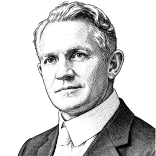
David Oman McKay (1873–1970) served as the ninth president of The Church of Jesus Christ of Latter-day Saints from 1951 until his death. Born on his father’s farm in Huntsville, Utah, to Welsh and Scottish immigrant parents, he graduated as valedictorian from the University of Utah in 1897. He served as principal of Weber Academy and married Emma Ray Riggs in 1901. Ordained an apostle in 1906, McKay served as an active general authority for nearly 64 years, longer than anyone else in Church history. He was superintendent of Sunday Schools, the Church’s first Commissioner of Education, and counselor in the First Presidency to both Heber J. Grant and George Albert Smith before becoming Church President. Under McKay’s leadership, Church membership tripled from 1.1 million to 2.8 million. He traveled more miles than all previous Church presidents combined, emphasizing worldwide Church growth. His teachings are captured in famous mottos including “Every member a missionary” and “No success can compensate for failure in the home.”

Dieter F. Uchtdorf
Dieter Friedrich Uchtdorf (born 6 November 1940) is a German-American religious leader and former airline executive who serves as Acting President of the Quorum of the Twelve Apostles of The Church of Jesus Christ of Latter-day Saints. Born in Moravská Ostrava in Nazioccupied Czechoslovakia (now Ostrava, Czech Republic), he experienced World War II as a refugee child, fleeing with his mother and siblings through bombed areas to Zwickau in eastern Germany. His family joined the Church in 1947 after his grandmother encountered a member in a soup line. When Uchtdorf was eleven, his father’s political dissent from Soviet rule endangered their lives. He was conscripted into the West German Bundeswehr in 1959 and volunteered for the air force, training as a fighter pilot in Big Spring, Texas, where he earned the Commander’s Trophy as the best student pilot in his class. After six years as a fighter pilot, Uchtdorf joined Lufthansa in 1965, becoming a captain at age 29. His career included flying the Boeing 737, Airbus, DC-10, and Boeing 747, rising to senior vice president and chief pilot of Lufthansa flight operations. He also served as chairman of the Flight Operations Committee of the International Air Transport Association. Called as a general authority in 1994, Uchtdorf was ordained an apostle on October 7, 2004—the first German apostle in Church history and the first born outside North America since 1952. He served as Second Counselor in the First Presidency from 2008 to 2018 under Thomas S. Monson. A naturalized U.S. citizen, he has been married to Harriet Reich since 1962; they have two children and multiple grandchildren. His messages on grace, new beginnings, and God’s love for all people have resonated across cultures and languages.