Authors

Don Bradley
Don Bradley is an American historian specializing in early Latter Day Saint history and author of The Lost 116 Pages: Reconstructing the Book of Mormon’s Missing Stories. His research focuses on the origins of the Book of Mormon and early church history.
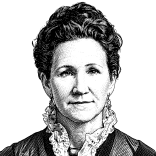
Elicia A. Grist
British actress Elicia Allely Grist lived from 1827 to 1898. She joined the Church of Jesus Christ of Latter-day Saints in May 1853, approximately five months following her husband, John Grist’s conversion. Her decision to join the church came at a significant personal cost, as her parents responded by disinheriting her. Throughout their lives together, the Grist family relocated frequently across England and Ireland, residing in Birmingham, Dublin, and Liverpool. The period in which Grist lived coincided with Britain’s Industrial Revolution, an era marked by sweeping economic, social, cultural, and political transformations. Among these changes was the invention of the steam printing press, which democratized access to printed materials and made them available to the expanding working class. This flourishing print culture provided a valuable public forum where individuals like Grist could articulate their values freely and document their religious experiences.

Eliza R. Snow
Eliza Roxcy Snow (21 January 1804 – 5 December 1887) was one of the most influential women in Latter-day Saint history—poet, theologian, leader, and “Zion’s Poetess,” a title bestowed by Joseph Smith Jr. Born in Becket, Massachusetts, she grew up in a family that valued learning and began publishing poetry in Ohio newspapers by age 22. Snow’s talent for verse produced over 500 poems during her lifetime, ten of which remain in the current LDS hymnal. Her most celebrated work, “O My Father” (originally titled “Invocation, or the Eternal Father and Mother”), introduced into Latter-day Saint devotional practice the doctrine of a Heavenly Mother. Written shortly after her father’s death and Joseph Smith’s martyrdom, it remains one of the most theologically significant hymns in the tradition. She served as secretary when Joseph Smith organized the first Relief Society in Nauvoo in 1842, then reestablished and led the organization in Utah, serving as general president from 1866 to 1887. Beyond the Relief Society, she organized the Young Ladies’ Mutual Improvement Association, the children’s Primary Association, and the Woman’s Commission Store. She served as president of the Deseret Hospital Association and was a powerful advocate for women’s participation in civic life and religious freedom. The older sister of Lorenzo Snow, fifth President of the Church, Eliza R. Snow was both a wife of Joseph Smith and later of Brigham Young. She died in 1887 at age 84, remembered as the “first lady of Mormon letters” and a pioneering advocate for women’s empowerment in nineteenthcentury America.

E. L. T. Harrison
Elias L. T. Harrison (1830–1900) was an early Latter-day Saint leader and writer who served missions in Great Britain and contributed thoughtful writings on priesthood responsibility and the nature of godliness. His 1858 essay in the Millennial Star articulated a profound vision of priesthood holders as representatives of God’s spirit and actions upon earth. He taught that ordinations alone do not make one godlike—rather, the priesthood calls individuals to put down evil and embody the virtues of the eternal God. Harrison emphasized that the world is to comprehend God through the lives of those who hold the priesthood. True priesthood, he taught, means becoming images of the living God, blessing and helping the weak and downtrodden until such service becomes natural.

Elvira S. Barney
Elvira Stevens Barney (1832–1909) was a physician, missionary, and advocate for women’s rights in early Utah. Born in Gerry, New York, to a merchant father and schoolteacher mother, she was baptized in 1844 and arrived in the Salt Lake Valley with the Brigham Young pioneer company in 1848. In 1851, Barney was called on a mission to the Sandwich Islands (Hawaii), where she taught the gospel and basic education while learning the Hawaiian language. She later pursued her long-held dream of becoming a doctor, studying at Wheaton College in Illinois and serving a mission to Philadelphia, where she continued her medical studies. She graduated as a doctor of medicine in 1883. Barney practiced obstetrics and taught medicine classes to women in Utah. She served as a visiting physician at Deseret Hospital and spoke at mass meetings defending Latter-day Saint women’s voting rights. Active in the Utah Woman Suffrage Association, she also authored The Stevens Genealogy, published in 1907.

Emanuel Swedenborg
Emanuel Swedenborg (1688–1772) was a Swedish pluralistic scientist, philosopher, theologian, and mystic. His theological writings describe a detailed structure of the spiritual world and emphasize the importance of useful service. Born in Stockholm to a prominent family, Swedenborg was one of the most learned men of his age, making significant contributions to mining engineering, anatomy, and other sciences before turning to spiritual matters in his fifties. His theological works, including Heaven and Hell, describe the afterlife as a realm of continued activity, purpose, and progression. His emphasis on useful service and continued growth after death has influenced many religious movements, including some aspects of Latter-day Saint thought about the nature of heaven and eternal progression.

Ezra Taft Benson
Ezra Taft Benson (1899–1994) was an American farmer, government official, and religious leader who served as the 13th President of The Church of Jesus Christ of Latter-day Saints from 1985 until his death. Born in Whitney, Idaho, Benson served a mission to Great Britain and later earned degrees in agriculture. He served as United States Secretary of Agriculture under President Dwight D. Eisenhower from 1953 to 1961, the only Cabinet member to serve all eight years of that administration. He taught that God uses people of the earth, especially good people, to accomplish His purposes—a principle reflected throughout history and continuing today. His presidency emphasized the Book of Mormon and its role in bringing people to Christ.

Freeman Dyson
Freeman John Dyson (1923–2020) was a British-American theoretical physicist and mathematician known for his work in quantum electrodynamics and speculative ideas about the far future of intelligent life and technology. Born in England, Dyson came to the United States in 1947 and spent most of his career at the Institute for Advanced Study in Princeton. He made significant contributions to physics, particularly in unifying the work of Feynman, Schwinger, and Tomonaga on quantum electrodynamics. His book Infinite in All Directions explores the possibility of life and mind spreading throughout the cosmos and adapting to cosmic conditions over astronomical timescales. His vision of an open, infinite universe where intelligence might persist and grow indefinitely resonates with transhumanist and religious visions of endless progression.

Friedrich Nietzsche
Friedrich Wilhelm Nietzsche (1844–1900) was a German philosopher whose work has exerted a profound influence on modern intellectual history. His concepts of the will to power and the Ubermensch explore human potential and transcendence. Born in Rocken, Prussia, Nietzsche became a professor of classical philology at the University of Basel at age 24. Health problems forced his retirement at 34, after which he wrote his most influential works before a mental breakdown in 1889. While often critical of religion, Nietzsche’s vision of human self-overcoming and the creation of new values has been interpreted as a secular parallel to religious ideas of transformation and transcendence. His challenge to “become who you are” echoes themes of human potential found in many religious traditions.

George Q. Cannon
George Quayle Cannon (1827–1901) was an early leader in the LDS Church, serving as a member of the First Presidency under four church presidents. He was also a delegate to the U.S. Congress from Utah Territory.