Authors

Gerrit W. Gong
Gerrit Walter Gong (born 23 December 1953) is an American diplomat, scholar, and religious leader who serves as a member of the Quorum of the Twelve Apostles of The Church of Jesus Christ of Latter-day Saints—the first person of Chinese descent to hold this position. Born in Redwood City, California, he shares his birthday with Joseph Smith. His grandparents emigrated from China, and he has traced his ancestry 33 generations to First Dragon Gong, born in A.D. 837 during the Tang dynasty. Gong received a bachelor’s degree in Asian and University studies from Brigham Young University in 1977, then attended Oxford University as a Rhodes Scholar, earning a master of philosophy degree in 1979 and a doctorate in international relations in 1981. His diplomatic career included service as special assistant to the undersecretary of state, special assistant to the U.S. ambassador in Beijing, personal advisor to the Chief Justice during his China visit, and executive officer for President George H.W. Bush’s visit to China. He held the Freeman Chair in China studies and served as Asia Director of the Center for Strategic and International Studies, testifying before Congress on East Asia issues. He has taught at Oxford, Johns Hopkins, Georgetown, and BYU, where he served as assistant to the president for planning and assessment until 2010. Gong was sustained as an Apostle on March 31, 2018, filling a vacancy created by the death of Thomas S. Monson. Married to Susan Lindsay since 1980, he is the first member of the Quorum of the Twelve in a multiracial marriage. They have four sons. His background in international relations and Chinese culture brings unique perspective to the Church’s global mission.

Gordon B. Hinckley
Gordon Bitner Hinckley (23 June 1910 – 27 January 2008) was the fifteenth President of The Church of Jesus Christ of Latter-day Saints and one of its most transformative leaders. Born in Salt Lake City, Utah, he earned a degree in English from the University of Utah in 1932 and served a mission in London from 1933 to 1935, where he preached publicly in Hyde Park. After returning from his mission, Hinckley devoted his life to Church service, working in public affairs and as executive secretary of the Church Radio, Publicity, and Literature committee. He was called as an Apostle in 1961 and served as counselor to three Church Presidents before becoming President himself on March 12, 1995. He married Marjorie Pay in 1937; they had five children. Hinckley’s presidency was marked by an unprecedented templebuilding program. More than half of all temples existing at his death were built under his leadership—over 70 temples in 21 countries. He oversaw the reconstruction of the Nauvoo Illinois Temple and the building of the 21,000-seat Conference Center. In 2001, he established the Perpetual Education Fund to help young members from developing countries receive higher education. He was awarded the Presidential Medal of Freedom in 2004. At his death at age 97, Hinckley was the oldest person to have presided over the Church. Approximately onethird of the Church’s membership had joined during his leadership, which saw growth from 9 million to nearly 13 million members. The most traveled President in Church history, he was the first to visit mainland China, bringing a global vision to Latter-day Saint leadership.

Harold Bloom
Harold Bloom (1930–2019) was an American literary critic and Sterling Professor of Humanities at Yale University. Born in New York City to Jewish immigrant parents, he became one of the most influential literary critics of the 20th century, known for his theory of the “anxiety of influence” and his defense of the Western literary canon. Bloom’s book “The American Religion” (1992) offered a provocative analysis of American religious movements, including Mormonism, which he characterized as a genuine new religious tradition rather than simply a Christian denomination. He saw in Mormon theology a distinctive vision of human potential and divine embodiment. Throughout his career, Bloom championed what he called the “strangeness” of great literature—its capacity to transform and transcend ordinary human experience. His interest in gnosticism, mysticism, and the visionary imagination connects to transhumanist themes of self-transcendence and human transformation.
Heber C. Kimball
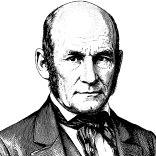
Heber Chase Kimball (1801–1868) was one of the original members of the Quorum of the Twelve Apostles and later served as first counselor to Brigham Young in the First Presidency for over twenty years. Born in Vermont, he learned the potter’s trade from his brother and joined the Church in 1832 after hearing the preaching of missionaries. In 1837, Joseph Smith called Kimball to lead the first LDS missionary effort in England. Beginning in Preston, Lancashire, the mission baptized about 1,500 converts before Kimball’s departure in 1838. This established a pattern of missionary work that would bring thousands of British converts to the Church in subsequent decades. A physically impressive man and powerful speaker, Kimball was known for his faith and devotion. When the First Presidency was reorganized in 1847, Brigham Young chose him as first counselor, a position he held until his death in 1868. At Kimball’s funeral, Young remarked that he had known him for 43 years.

Heber J. Grant
Heber Jeddy Grant (1856–1945) was an American religious leader and businessman who served as the 7th President of The Church of Jesus Christ of Latter-day Saints from 1918 until his death. Born in Salt Lake City to Rachel Ridgeway Ivins and Jedediah Morgan Grant (who died nine days after Heber’s birth), Grant overcame poverty and a weak constitution through determination and hard work. He became a successful businessman and was called to the Quorum of the Twelve Apostles at age 25. Grant emphasized self-reliance, practical faith, and industry. First Presidency statements during his administration addressed the relationship between science and religion, noting that the Church’s fundamental doctrines do not conflict with scientific inquiry into questions of how creation occurred.

Helen Keller
Helen Adams Keller (1880–1968) was an American author, disability rights advocate, political activist, and lecturer. She was the first deafblind person to earn a Bachelor of Arts degree.

Hippolytus
Hippolytus of Rome (c. 170–235 AD) was one of the most important early Christian theologians. His writings include commentaries on Scripture and theological treatises on the nature of Christ and human deification. Hippolytus was a disciple of Irenaeus and became a leading theologian in Rome. His Refutation of All Heresies is a major source for understanding early Christian debates. He taught that God could have made humans gods from the beginning, but instead offered them the opportunity to become gods through obedience and faithfulness. Though he initially opposed Pope Callixtus and was considered an antipope, Hippolytus was later reconciled with the Church and died as a martyr, exiled to Sardinia during the persecution of Maximinus Thrax.
Howard W. Hunter
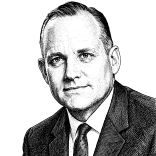
Howard William Hunter (14 November 1907 – 3 March 1995) was the fourteenth President of The Church of Jesus Christ of Latter-day Saints, serving the shortest presidential tenure in Church history—just nine months from June 1994 until his death. Born in Boise, Idaho, he was the first Church President born in the twentieth century and the last to die in it. Hunter grew up in a part-member family; his mother was an active member while his father did not join until Howard was an adult. He begged to be baptized and was finally permitted at age twelve, becoming the first Church President to be baptized in an indoor font. He was the second person to earn Eagle Scout in Idaho. He met Clara May “Claire” Jeffs in 1928; they married in the Salt Lake Temple in 1931 and had three sons, though their first son William died in infancy. After graduating with a law degree in 1939, Hunter served as the first president of the Pasadena California Stake. In 1959, President David O. McKay called him as an Apostle, prompting him to leave his law practice for full-time Church service. He served for over 35 years as a general authority, contributing to the establishment of the Polynesian Cultural Center, the Orson Hyde Memorial Garden in Jerusalem, and the BYU Jerusalem Center. From 1964 to 1972, he oversaw the Genealogical Society of Utah’s first computerization of records. As Church President, Hunter emphasized Christlike living and temple attendance. Despite numerous health challenges including a heart attack, tumor surgery, and quadruple bypass, he dedicated the Orlando Florida and Bountiful Utah temples before his death. His ministry, though brief, called Latter-day Saints to make the temple the great symbol of their membership.

Hugh B. Brown
Hugh Brown Brown (1883–1975) was an attorney, educator, and Church leader who served in the First Presidency under President David O. McKay. Born in Granger, Utah, his family moved to Alberta, Canada, when he was fifteen. He served a mission in England from 1904 to 1906 and later married Zina Young Card, granddaughter of Brigham Young. Brown had a distinguished career before his general authority service, including military leadership in World War I, serving as president of the British Mission during World War II, and working as LDS Servicemen’s Coordinator. He joined BYU’s faculty in 1946 as a professor of religion. Called as an apostle in 1958 at age 74, Brown served as a counselor in the First Presidency from 1961 to 1970. He was known as a talented speaker and favored rescinding the Church’s priesthood restriction before it was changed in 1978. His address “The Profile of a Prophet” remains widely quoted for its articulation of the nature of prophetic authority.

Hugh Nibley
Hugh Winder Nibley (1910–2005) was one of the most celebrated scholars in Latter-day Saint history. A professor at Brigham Young University for nearly 50 years, he was fluent in Latin, Greek, Hebrew, Egyptian, Coptic, Arabic, German, French, and Spanish. Born in Portland, Oregon, he served as an LDS missionary in Switzerland and Germany before earning his doctorate from UC Berkeley in 1938. During World War II, Nibley served in military intelligence for the 101st Airborne Division. He drove the first jeep ashore on Utah Beach during D-Day, participated in Operation Market Garden, and witnessed the aftermath of Nazi concentration camps. At the request of Apostle John A. Widtsoe, he joined the BYU faculty in 1946. A prolific author, Nibley wrote extensively on ancient scripture, apologetics, and Latter-day Saint history. He was known for both vigorously defending the Church and frankly critiquing what he saw as shortcomings in Latter-day Saint culture. His works include An Approach to the Book of Mormon, Since Cumorah, and Approaching Zion.