Authors

Irenaeus
Irenaeus of Lyon (c. 130–202 AD) was an early Church Father and apologist. His major work “Against Heresies” defended orthodox Christianity against Gnosticism and articulated the concept of recapitulation—that Christ recapitulates all stages of human life to restore humanity to God. Born in Smyrna (modern Izmir, Turkey), Irenaeus was taught by Polycarp, who had known the Apostle John. He later became bishop of Lyon in Gaul (France), where he worked to spread Christianity among the Celtic peoples. Irenaeus famously wrote that “the Word of God became what we are, that He might bring us to be even what He Himself is.” This became a foundational statement of theosis in Christian theology. His vision of human destiny as participation in divine life has profound resonances with Latter-day Saint teachings on eternal progression and becoming like God.
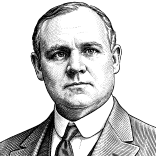
James E. Talmage
James Edward Talmage (1862–1933) was an Englishborn scientist and religious leader who served as a member of the Quorum of the Twelve Apostles of The Church of Jesus Christ of Latter-day Saints from 1911 until his death. Born in Hungerford, England, he emigrated with his family to Utah in 1877 and began teaching at Brigham Young Academy at age sixteen. Talmage pursued advanced studies in chemistry and geology at Lehigh University and Johns Hopkins University, receiving his Ph.D. from Illinois Wesleyan University in 1896. He served as president of the University of Utah and was elected a Fellow of the Royal Microscopical Society, the Royal Scottish Geographical Society, and the Geological Society of London. At the request of the First Presidency, Talmage wrote Jesus the Christ, completing much of it in a room set aside for him in the Salt Lake Temple. Published in 1915, it remains one of the most influential Latter-day Saint works on the life and ministry of Jesus Christ. His other significant works include The Articles of Faith and The Great Apostasy.

James Hughes
James J. Hughes is an American sociologist and bioethicist who serves as the executive director of the Institute for Ethics and Emerging Technologies. He is a leading advocate for democratic transhumanism. Hughes earned his PhD in sociology from the University of Chicago and has taught at Trinity College in Hartford, Connecticut. He is the author of Citizen Cyborg: Why Democratic Societies Must Respond to the Redesigned Human of the Future. His work explores the compatibility of religious and transhumanist views of metaphysics, consciousness, and human transformation. He argues that many religious traditions, including those that emphasize theosis or human divine potential, share common ground with transhumanist aspirations for human enhancement.

Jeffrey R. Holland
Jeffrey Roy Holland (3 December 1940 – 27 December 2025) was an American religious leader, educator, and author who served as Acting President of the Quorum of the Twelve Apostles of The Church of Jesus Christ of Latter-day Saints. Born in St. George, Utah, to a convert father and a mother from a long line of Latter-day Saints, he was a student leader and varsity athlete who met his future wife Patricia Terry while she was a cheerleader. Holland served a mission to Great Britain from 1960 to 1962, where his companions included future apostles Quentin L. Cook and his mission president Marion D. Hanks. He earned a BA in English and an MA in Religious Education from BYU, followed by a second master’s degree and PhD in American Studies from Yale University. He married Patricia in 1963; they have three children. His educational career included service as an Institute director, dean of Religious Instruction at BYU (where he established the Religious Studies Center), commissioner of the Church Educational System, and ninth president of Brigham Young University from 1980 to 1989. During his BYU presidency, he founded the BYU Jerusalem Center. He was called as a general authority in 1989 and ordained an apostle on June 23, 1994. Known for his powerful oratory and passionate testimony, Holland chaired the Missionary Curriculum Task Force that developed Preach My Gospel. He served as Acting President of the Quorum of the Twelve from November 2023 until his death. His books, including Christ and the New Covenant and Trusting Jesus, combined scholarly depth with pastoral warmth. He died on December 27, 2025, from complications of kidney disease.

Johannes Kepler
Johannes Kepler (27 December 1571 – 15 November 1630) was a German mathematician, astronomer, and natural philosopher who fundamentally transformed humanity’s understanding of the cosmos. Born in Weil der Stadt, Germany, to a soldier father and an herbalist mother who was later accused of witchcraft, Kepler studied at the University of Tübingen under Michael Maestlin, who taught him the Copernican heliocentric system. In 1596, Kepler published Mysterium Cosmographicum (The Cosmographic Mystery), the first published defense of Copernicus’s suncentered model. After being forced out of his teaching position in Graz due to his Lutheran faith, he moved to Prague in 1600 to work for the renowned astronomer Tycho Brahe. When Tycho died suddenly in 1601, Kepler succeeded him as imperial mathematician to Holy Roman Emperor Rudolf II. Kepler’s greatest achievement was his three laws of planetary motion: that planets move in elliptical orbits with the sun at one focus (1609); that a line connecting a planet to the sun sweeps equal areas in equal times; and that the square of a planet’s orbital period is proportional to the cube of its mean distance from the sun (1619). These laws, published in Astronomia Nova (1609) and Harmonices Mundi (1619), laid the foundation for Newton’s law of universal gravitation. Called the “founder of celestial mechanics,” Kepler was the first to identify natural laws in the modern sense. His fusion of physics and astronomy created modern astronomical science, demonstrating that the same physical principles governing motion on Earth apply throughout the universe—a revolutionary insight with profound implications for understanding humanity’s place in the cosmos.
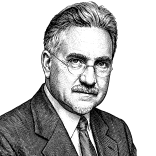
John A. Widtsoe
John Andreas Widtsoe (1872–1952) was a Norwegian-American scientist and apostle who brought a unique synthesis of scientific rigor and religious faith to his Church service. Born on an island among fisher folk in Norway, he emigrated to Utah after his mother’s conversion. He graduated from Harvard with the highest honors and earned his doctorate from the University of Gottingen in Germany. Widtsoe became renowned for his expertise in irrigation and dry farming, serving as director of the Utah Agricultural Experiment Station and later as president of both Utah State Agricultural College and the University of Utah. He was called to the Quorum of the Twelve in 1921 and later served as president of the European Mission. A prolific author, Widtsoe wrote A Rational Theology and Evidences and Reconciliations, which addressed common questions about faith and doctrine. His marriage to Leah Dunford, granddaughter of Brigham Young, united him with a distinguished Church lineage. Despite personal tragedy, losing four of his seven children in infancy, he maintained a life of faithful service.

John Taylor
John Taylor (1808–1887) served as the third president of The Church of Jesus Christ of Latter-day Saints from 1880 until his death. Born in Milnthorpe, England, he immigrated to Canada in 1832 and converted to the Church in 1836. Known as the “Champion of Liberty,” he edited several Church publications and served multiple missions to England and France. Taylor was present in Carthage Jail when Joseph and Hyrum Smith were martyred in 1844. Shot five times, he survived and was thereafter known as a “living martyr.” He is remembered for singing “A Poor Wayfaring Man of Grief” at Hyrum’s request shortly before the attack. As Church President, Taylor led the Saints during intense federal persecution over plural marriage. The Edmunds Act of 1882 forced him into hiding for the last years of his life, during which he established colonies of refuge in Mexico and Canada. He died on July 25, 1887, still maintaining his convictions about religious liberty.
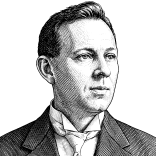
Joseph Fielding Smith
Joseph Fielding Smith (1876–1972) served as the tenth president of The Church of Jesus Christ of Latter-day Saints from 1970 until his death. He was the son of Joseph F. Smith, the sixth Church president, and the grandson of Hyrum Smith, brother of the Prophet Joseph Smith. By age ten, he had read the Book of Mormon twice. Smith served as an apostle for over 60 years, longer than almost anyone in Church history. He held positions as Church Historian, president of the Genealogical Society, and president of the Salt Lake Temple. As one of the Church’s most prolific writers, his works include Doctrines of Salvation, Essentials in Church History, and Answers to Gospel Questions. When he became Church President at age 93, he was the oldest person to assume that role. Though his presidency was brief, he led important administrative reforms that improved correlation of Church publications and brought the Quorum of the Twelve into more decisionmaking. He died peacefully on July 2, 1972, after attending church services that day.

Joseph F. Smith
Joseph Fielding Smith (1838–1918) was the 6th President of The Church of Jesus Christ of Latter-day Saints, serving from 1901 until his death. He was the son of Hyrum Smith and nephew of Joseph Smith. Born in Far West, Missouri, Joseph F. Smith experienced the trials of early Church history firsthand. As a young child, he witnessed the aftermath of the Carthage martyrdom. At age nine, he drove an ox team across the plains to Utah with his widowed mother. At fifteen, he was called on a mission to Hawaii, where he had a transformative vision of the afterlife. He taught that Jesus’s work was not finished with his death and resurrection but continues until all who can be saved are redeemed. This expansive vision of salvation includes work for the dead and the promise that the faithful become saviors on Mount Zion alongside Christ.
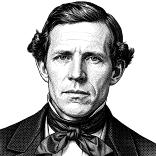
Joseph Smith
Joseph Smith was born on December 23, 1805, in the quaint town of Sharon, Vermont. Emerging from humble beginnings, he would grow to become a prominent figure in American religious history. Joseph’s early years were characterized by an insatiable quest for spiritual truth, set against the backdrop of the Second Great Awakening. In the spring of 1820, at the tender age of 14, he experienced a miraculous visitation in which he beheld God the Father and Jesus Christ. This profound encounter set in motion a series of divinely orchestrated events, culminating in the translation of the golden plates and the subsequent publication of the Book of Mormon. Joseph’s steadfast commitment to his divine mission resulted in the founding of The Church of Jesus Christ of Latter-day Saints in 1830, marking the beginning of a new religious movement. Throughout his life, Joseph Smith faced tremendous challenges, including relentless persecution, violent mob actions, and unjust imprisonment. Despite these trials, he demonstrated remarkable resilience, guiding the Saints through adversity from Ohio to Missouri, and ultimately to the thriving community of Nauvoo, Illinois. In Nauvoo, he fostered a vibrant society, articulating profound doctrines about the eternal nature of families and the limitless potential of the human soul. Tragically, his life was cut short when he was martyred on June 27, 1844, in Carthage, Illinois. Despite his untimely death, Joseph Smith’s legacy endures, with millions of Latter-day Saints worldwide continuing to embrace the faith he restored.