Authors

Lincoln Cannon
Lincoln Cannon is an American philosopher and technologist who co-founded the Mormon Transhumanist Association in 2006, serving as its president from 2006 to 2016. He is a leading advocate of technological evolution and postsecular religion, combining software engineering expertise with degrees in philosophy and business. Cannon is also a founder and board member of the Christian Transhumanist Association. He formulated the New God Argument, a logical argument for faith in God that has become popular among religious transhumanists. His academic work includes “Mormonism Mandates Transhumanism” published in Religion and Human Enhancement: Death, Values, and Morality (Palgrave Macmillan, 2017) and “Transfigurism: A Future of Religion as Exemplified by Religious Transhumanists” in The Transhumanism Handbook (Springer Verlag, 2019). Mormon transhumanism, as articulated by Cannon, holds that humanity should learn how to be compassionate creators. This idea is central to the Mormon theological tradition, which provides a religious framework consistent with naturalism and supportive of human transformation. Cannon’s work bridges religious faith with scientific advancement, advocating for the ethical use of technology to extend human abilities in ways consistent with a religious worldview.
Lorenzo Snow
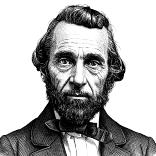
Lorenzo Snow was born in Mantua, Ohio, to a family that prioritized education and faith. Although he initially aspired to a military career, a pivotal conversation with Apostle David W. Patten in 1835 turned his heart toward religion. He was baptized in Kirtland, Ohio, in 1836 and soon dedicated his life to missionary service, preaching the gospel in the United States, Great Britain, Italy, and Hawaii. Ordained an Apostle in 1849, he later demonstrated exceptional leadership by establishing a successful cooperative community in Brigham City, Utah, blending his spiritual calling with practical industry. In 1898, at the age of 84, Lorenzo Snow became the fifth President of the Church of Jesus Christ of Latter-day Saints. His administration is best remembered for his response to the Church’s dire financial situation; following a divine manifestation in St. George, Utah, he fervently taught the Saints the importance of paying a full tithe. The members’ faithful response to this plea helped free the Church from debt and established a firm temporal foundation for the future. He served as President until his death in 1901, leaving a legacy of refined character and firm testimony of the gospel.
L. Tom Perry
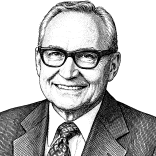
Lowell Tom Perry (5 August 1922 – 30 May 2015) was an American businessman and religious leader who served as a member of the Quorum of the Twelve Apostles of The Church of Jesus Christ of Latter-day Saints for over forty years. Born in Logan, Utah, to a father who served as bishop throughout Perry’s childhood, he developed an early grounding in Church service. From 1942 to 1944, Perry served a mission in the Northern States Mission headquartered in Chicago. After returning, he joined the United States Marine Corps and was assigned to the 2nd Marine Division, landing on Saipan where he spent about a year and helped construct an LDS chapel on the island. He was among the American troops sent to occupy Japan after the war. Perry graduated from Utah State Agricultural College (now Utah State University) in 1949 with a bachelor’s degree in finance, having served as president of the university’s Associated Students. His professional career was spent in retail, climbing the corporate ladder to become a top executive in department stores across Idaho, California, New York, and Massachusetts before entering full-time Church service. Called as an Assistant to the Quorum of the Twelve Apostles in 1972, Perry was sustained as an Apostle on April 6, 1974, and ordained five days later. He married Virginia C. Lee in 1947; she died of cancer in December 1974. He remarried Barbara Dayton in 1976. Known for his optimism and big smile, Perry served faithfully until his death from thyroid cancer in 2015. His decades of service exemplified the integration of professional excellence with lifelong religious commitment.

Marianne C. Sharp
Marianne Clark Sharp (1893–1975) was a leader in The Church of Jesus Christ of Latter-day Saints who served in the Relief Society General Presidency from 1945 to 1974. She emphasized the importance of education and intelligence in spiritual progression, teaching that since knowledge and intelligence are the doorway to eternal life, Relief Society leaders should be zealous in gaining and sharing knowledge. Her teachings connected the pursuit of learning with Latter-day Saint doctrine about eternal progression, citing Joseph Smith’s teaching that “a man is saved no faster than he gets knowledge” and the Lord’s declaration that “it is impossible for a man to be saved in ignorance.”

Martha H. Tingey
Martha Jane Horne Tingey (1857–1938) served as the second general president of the Young Ladies’ Mutual Improvement Association (YLMIA) from 1905 to 1929. Born in Salt Lake City to Mary Isabella Hales and Joseph Horne, she was baptized at age eight by her father. She attended private schools and Deseret University, developing gifts in music and elocution. Tingey was called as second counselor in the YLMIA at age twenty-two and served in the general presidency for an extraordinary 49 years. During her tenure as president, the organization instituted yearly slogans, roadshows, the Beehive program, leadership week, and camps for young women. In 1922, she selected green and gold as the official colors. She authored a handbook for young Mormon women and declared: “My heart is with the Mutual Improvement work. I love the youth of Zion, and I am anxious that they may become a mighty army for righteousness in the kingdom of God.” Two of her counselors, Ruth May Fox and Lucy Grant Cannon, later succeeded her as YLMIA presidents.
Mary Ann Freeze
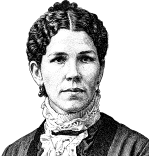
Mary Ann Burnham Freeze was a leader in the Young Ladies Mutual Improvement Association and an early pioneer who crossed the plains to Utah in the 1840s or 1850s. She is documented in the Mormon Pioneer Overland Travel database under her maiden name, Mary Ann Burnham. Freeze served in leadership positions in the LDS Church’s women’s organizations during a formative period in their development. Her contributions to the Young Women’s organization helped establish patterns of service and education that would shape the organization for generations. Her life and service are documented in Augusta Joyce Crocheron’s Representative Women of Deseret (1884) and in the history of the Young Ladies’ Mutual Improvement Association. She died in 1912, having devoted decades to strengthening the young women of Zion.

Maximus the Confessor
Maximus the Confessor (c. 580–662 AD) was a Christian monk, theologian, and scholar who developed sophisticated theology of theosis, teaching that humanity is destined to participate in the divine nature through Christ. Born to a noble Byzantine family, Maximus initially served as a court secretary before becoming a monk. He became the leading opponent of Monothelitism, the doctrine that Christ had only one will, arguing instead that Christ has both divine and human wills. His theological writings explore how God became the Son of Man so that humans might become sons of God. Maximus taught that through the Incarnation, Christ makes possible the deification of humanity without the loss of human identity. For his opposition to imperial theology, he was tried, mutilated (his tongue and right hand cut off), and exiled, dying shortly after in 662 AD.

Michael Shermer
Michael Brant Shermer (born 1954) is an American science writer, historian of science, and founder of The Skeptics Society. His work explores the intersection of science, skepticism, and belief. Shermer earned his PhD in the history of science from Claremont Graduate University and has written extensively on evolution, pseudoscience, and the psychology of belief. He founded Skeptic magazine and has been a columnist for Scientific American. While generally skeptical of supernatural claims, Shermer has engaged thoughtfully with questions about the future of intelligence and technology, including what he calls “Shermer’s Last Law”—that any sufficiently advanced extraterrestrial intelligence would be indistinguishable from God.

Neal A. Maxwell
Neal Ash Maxwell (1926–2004) was a member of the Quorum of the Twelve Apostles of The Church of Jesus Christ of Latter-day Saints from 1981 until his death. He was known for his eloquent speaking and writing style. Born in Salt Lake City, Maxwell served in World War II and later earned a PhD in political science. He served as Commissioner of the Church Educational System and was Executive Vice President of the University of Utah before his call to the Seventy and later the Twelve. His teachings often explored the tension between absolute truth and fraternal love, drawing from diverse sources including Thomas Merton and Mahatma Gandhi. He taught that love is the only answer to the challenge of possessing truth while remaining fraternal with others who see differently.

Nick Bostrom
Nick Bostrom (born 1973) is a Swedishborn philosopher known for his work on existential risk, the simulation argument, and superintelligence. He is a professor at Oxford University and director of the Future of Humanity Institute. Bostrom earned his PhD from the London School of Economics and has published influential papers on the anthropic principle, human enhancement ethics, and the future of intelligence. His book Superintelligence: Paths, Dangers, Strategies examines the potential risks and opportunities of artificial general intelligence. His simulation argument—that we might be living in a computer simulation—has generated significant philosophical discussion about the nature of reality and has been compared to religious cosmologies that see the physical world as embedded within a larger spiritual reality.