
Authors

Russell M. Nelson
Russell Marion Nelson (born 1924) is an American religious leader and former surgeon who has served as the 17th and current President of The Church of Jesus Christ of Latter-day Saints since 2018. Before his religious calling, Nelson was a pioneering heart surgeon who performed Utah’s first openheart surgery using a heartlung machine. He earned his MD from the University of Utah and PhD from the University of Minnesota. He contributed to the development of cardiopulmonary bypass surgery. His teachings emphasize learning to listen to others, including those of diverse religious or political perspectives, promoting tolerance and understanding. He has taught that the wise listen to learn from neighbors, showing that spiritual growth includes openness to others’ experiences and sentiments.

Samuel Richards
Samuel Whitney Richards (1824–1909) was an early Latter-day Saint leader who served missions to Great Britain and held various church callings throughout his life. His contributions to the Millennial Star and other publications explored the nature of prophets and revelation. He taught about the continuity of prophetic gifts and the importance of personal spiritual experience in understanding divine truth. Richards was part of the generation that helped establish the Church in the Mountain West and contributed to the theological development of Latter-day Saint thought on ongoing revelation.

Sarah M. Kimball
Sarah Melissa Granger Kimball (1818–1898) was a pioneer advocate for women’s rights and an early leader in the Relief Society. Born in Phelps, New York, to a prominent family, she joined the Church in 1833 at age fifteen. She was one of twenty-three women known to have attended Joseph Smith’s School of the Prophets in Kirtland. In Nauvoo, Kimball organized a charitable sewing society that evolved into the Relief Society when it was officially organized on March 17, 1842. She believed this founding marked the beginning of a new era of opportunity for women worldwide. After crossing the plains to Salt Lake City in 1851, driving her own team, she was appointed Relief Society president of the Fifteenth Ward. Kimball served as ward Relief Society president for forty years while also holding positions as general secretary of the Relief Society and president of the Utah Woman Suffrage Association. Her gravestone reads “Strong-Minded and Warm-Hearted,” fitting tribute to a woman who declared that “education and agitation are our best weapons of warfare” in advancing women’s rights.

Sigmund Freud
Sigmund Freud (1856–1939) was an Austrian neurologist and the founder of psychoanalysis. His theories about the unconscious mind and the nature of human civilization continue to influence psychology and culture. Born in Freiberg, Moravia (now Czech Republic), Freud studied medicine in Vienna and developed psychoanalysis through clinical practice. His ideas about the unconscious, dream interpretation, and the structure of the psyche transformed understanding of the human mind. In Civilization and Its Discontents, Freud explored the tension between individual desires and social constraints, raising questions about human nature and the possibility of improvement that remain relevant to discussions of human enhancement and technological transformation.

Silvanus
Silvanus was an early Christian teacher associated with the Nag Hammadi texts. The Teachings of Silvanus is a wisdom text that emphasizes moral instruction and the pursuit of divine knowledge. This text, discovered among the Nag Hammadi library in Egypt in 1945, represents a form of early Christian wisdom literature that combines Jewish, Greek, and Christian elements. It teaches that those who know themselves will know God, and knowing God, will become like God. The Teachings of Silvanus encourages readers to become the image of God, bearing nothing earthly, so that they may consort with God and become gods. This emphasis on human transformation and divine potential aligns with broader early Christian themes of theosis and has resonances with Latter-day Saint teachings on becoming like Heavenly Parents.
Spencer W. Kimball
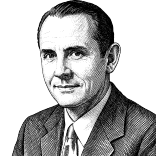
Spencer Woolley Kimball (March 28, 1895 – November 5, 1985) was the twelfth president of The Church of Jesus Christ of Latter-day Saints, serving from 1973 until his death. A grandson of Heber C. Kimball, one of the original apostles called in 1835, Spencer was born in Salt Lake City, the sixth of eleven children. When he was three years old, his family moved to Thatcher, Arizona, where his father served as stake president. His mother died when he was eleven, and his childhood was marked by health challenges including typhoid fever and facial paralysis. After serving a mission in the central United States, Kimball married Camilla Eyring in 1917 and worked in banking, insurance, and real estate. In 1943, at age 48, he was called to the Quorum of the Twelve Apostles, where he served for thirty years with special assignments to Native American communities. His ministry was marked by remarkable resilience: throat cancer in 1957 required surgery that removed one vocal cord, leaving him with a distinctive soft, gravelly voice, and he underwent open-heart surgery in 1972 performed by future church president Russell M. Nelson. Despite becoming church president at age 78, Kimball led with extraordinary energy, embodied in his mottos “Do It!” and “Lengthen Your Stride.” Under his leadership, missionary numbers more than doubled. Most significantly, in June 1978, he announced Official Declaration 2, extending priesthood ordination to all worthy male members regardless of race—a revelation he described as coming after prolonged prayer in the Salt Lake Temple. He also added two revelations to the scriptural canon, reorganized the First Quorum of the Seventy, and expanded the number of operating temples from fifteen to thirty-one. Kimball’s leadership demonstrated that transformation remains possible regardless of age or physical limitation. His life exemplified the Latter-day Saint belief in eternal progression—the conviction that human beings are capable of infinite growth and eventual godhood through divine grace and persistent effort.

Stephen L. Richards
Stephen L Richards (1879–1959) was a member of the Quorum of the Twelve Apostles and later First Counselor in the First Presidency of The Church of Jesus Christ of Latter-day Saints. Born in Mendon, Utah, Richards was a lawyer before his church service. He served in the Twelve from 1917 and in the First Presidency under David O. McKay from 1951 until his death. Richards took a thoughtful approach to science and religion, teaching that if the evolutionary hypothesis of creation is ultimately found correct, the biblical account is sufficiently comprehensive to include the whole process. He saw no inherent conflict between scientific discovery and religious truth.

Sterling M. McMurrin
Sterling Moss McMurrin (1914–1996) was an American philosopher, educator, and public intellectual who served as United States Commissioner of Education under President John F. Kennedy. Born in Woods Cross, Utah, he spent most of his career at the University of Utah, where he was the E. E. Ericksen Distinguished Professor of Philosophy. McMurrin’s philosophical work focused on the intersection of religion and philosophy, particularly examining Mormon theology through the lens of Western philosophical traditions. His books “The Theological Foundations of the Mormon Religion” and “The Philosophical Foundations of Mormon Theology” remain influential analyses of LDS thought. Known for his intellectual independence and sometimes controversial views within Mormon circles, McMurrin emphasized the progressive and humanistic elements of Mormon theology, particularly its teachings about human potential and the relationship between humanity and divinity.

Steven Dick
Steven J. Dick (born 1949) is an American astronomer, author, and former NASA Chief Historian. He has written extensively on astrobiology, cosmology, and the philosophical implications of extraterrestrial life. Dick served as NASA’s Chief Historian from 2003 to 2009 and has held positions at the U.S. Naval Observatory and various universities. His books include The Biological Universe and Life on Other Worlds. His work on “cosmotheology” explores how the discovery of extraterrestrial intelligence might affect religious thought. He has argued that such a discovery would have profound theological implications, potentially transforming human understanding of our place in the cosmos and our relationship to the divine.

Tad R. Callister
Tad Richards Callister (born 1945) is a former General Authority of The Church of Jesus Christ of Latter-day Saints who served in the Presidency of the Seventy from 2008 to 2014 and as Sunday School General President from 2014 to 2019. A graduate of Brigham Young University and UCLA Law School, Callister practiced law before his full-time church service. He has written and spoken extensively on the Atonement and the divine potential of humanity. His BYU Education Week address “Our Identity and Our Destiny” explored the Latter-day Saint understanding of human beings as literal children of God with divine potential, connecting this doctrine to questions of purpose and meaning.