Authors
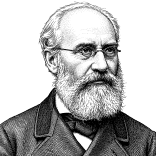
Nikolay Fyodorov
Nikolay Fyodorovich Fyodorov (9 June 1829 – 28 December 1903) was a Russian Orthodox Christian philosopher, religious thinker, and futurologist who founded the intellectual movement known as Russian cosmism—a direct precursor to modern transhumanism. Born as Nikolay Pavlovich Gagarin, the illegitimate son of Prince Pavel Ivanovich Gagarin, he studied at the Richelieu Lyceum in Odessa before serving as a teacher and later joining the Rumyantsev Museum as a librarian in 1878. Called the “Socrates of Moscow,” Fyodorov was respected and admired by Leo Tolstoy, Fyodor Dostoevsky, and Vladimir Solovyov. His major contribution to philosophy was the “Common Task”—humanity’s collective mission to regulate the forces of nature, defeat death, and resurrect ancestors through scientific means. He advocated for radical life extension, physical immortality, and the literal resurrection of the dead, insisting that knowledge without action was worthless. Fyodorov opposed intellectual property and never published during his lifetime. His selected articles were printed posthumously as Philosophy of the Common Task (also known as Philosophy of Physical Resurrection). His ideas influenced diverse figures, from rocket pioneer Konstantin Tsiolkovsky to composer Alexander Scriabin. He died of pneumonia in 1903 in a shelter for the poor; his grave was destroyed by the Soviet government in 1930. Fyodorov’s synthesis of Orthodox Christianity with scientific ambition for immortality and resurrection makes him a foundational figure for understanding the religious dimensions of transhumanist thought.

Nikos Kazantzakis
Nikos Kazantzakis (1883–1957) was a Greek writer, philosopher, and one of the most celebrated authors of the 20th century. Born in Heraklion, Crete, during Ottoman rule, he studied law at the University of Athens before pursuing philosophy in Paris under Henri Bergson. His dissertation explored Nietzsche’s philosophy of right and state. Kazantzakis is best known for Zorba the Greek, inspired by his friendship with a worker named Georgios Zorbas. The novel became worldfamous after the 1964 film adaptation. His other major works include The Last Temptation of Christ, Christ Recrucified, and his epic poem The Odyssey: A Modern Sequel, which he considered his greatest achievement. He was nominated for the Nobel Prize in Literature nine times, losing to Albert Camus in 1957 by a single vote. Camus later said Kazantzakis deserved the honor “a hundred times more” than himself. His epitaph, inscribed on his tomb overlooking the mountains and sea of Crete, reads: “I hope for nothing. I fear nothing. I am free.”

Origen
Origen of Alexandria (c. 184–253 AD) was an early Christian scholar, ascetic, and theologian. He was one of the most influential figures in early Christian theology and philosophy, known for his allegorical interpretation of Scripture. Born to Christian parents in Alexandria, Origen became head of the catechetical school there at age eighteen. He was extraordinarily prolific, producing biblical commentaries, theological treatises, and apologetic works. His Contra Celsum is a major defense of Christianity against pagan criticism. Origen taught that through communion with the divine, humans may rise to become divine—not only in Jesus but in all who believe and enter upon the life that Jesus taught. While some of his speculative ideas were later condemned, his influence on Christian thought, particularly on human potential for transformation and union with God, remains profound.
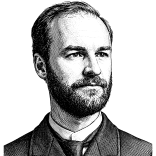
Orson F. Whitney
Orson Ferguson Whitney (1855–1931) was an apostle, historian, and poet who articulated an early vision for Mormon literature. Born in Salt Lake City, he was the son of Horace K. Whitney and Helen Mar Kimball, connecting him to both the Whitney and Kimball families prominent in early Church history. As a young man, Whitney aspired to be an actor, but during his mission to the Eastern States he discovered his calling as a writer and speaker. He served as bishop of the Eighteenth Ward for 28 years and as Assistant Church Historian before his call as an apostle in 1906. He also served in the Salt Lake City Council and as a State Senator. Whitney authored The History of Utah and biographies of Heber C. Kimball and Lorenzo Snow. His epic poem Elias, An Epic of the Ages represents a major work of early Mormon literature. His 1888 sermon “Home Literature” was the first to articulate a vision for distinctively Mormon literary arts. He also wrote hymns including “Savior, Redeemer of My Soul.”
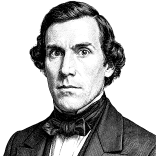
Orson Pratt
Orson Pratt (1811–1881) was an original member of the Quorum of the Twelve Apostles, a mathematician, and a prolific writer for the early Latter-day Saint movement. The younger brother of Parley P. Pratt, he was baptized on his nineteenth birthday in 1830 and ordained an apostle in 1835. He became the last surviving member of the original Twelve. On July 21, 1847, Pratt became the first Latter-day Saint to enter the Salt Lake Valley, arriving three days before the main pioneer company. He preached the first sermon in the valley and dedicated it to the Lord. He and William Clayton also invented a precursor to the modern odometer to measure their journey. Throughout his life, Pratt pursued his strong interest in mathematics and astronomy. He published New and Easy Method of Solution of the Cubic and Biquadratic Equations and Key to the Universe. He served as Church Historian and Recorder, edited Church periodicals, and divided the Book of Mormon and Doctrine and Covenants into verses with cross-references.
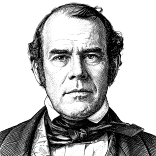
Parley P. Pratt
Parley Parker Pratt was among the most talented and influential figures in the formative period of The Church of Jesus Christ of Latter-day Saints: Apostle, missionary, theologian, poet, polemicist, prisoner, explorer, polygamist, and finally, in the view of many, martyr. Pratt was born in central New York State to Jared Pratt—a weaver thrown out of employment in his trade by the Industrial Revolution—and his wife, Charity. Like the Prophet Joseph Smith, who was two years his senior, Parley P. Pratt grew up in a family on the margins of the rural economy. Jared Pratt moved from place to place as a landless itinerant laborer whose “means to educate his children were very limited,” although they did have access to what Parley later termed an “excellent system of common school education.” Notwithstanding their limited opportunities, two of Jared and Charity Pratt’s five sons, Parley and his younger brother Orson, would become distinguished among the first generation of Latter-day Saints for their intellectual and rhetorical powers. Parley compensated for the deficiencies in his formal education through an early and avid appetite for reading: “I always loved a book; . . . a book at every leisure moment of my life.” Prominent among these readings was the Bible, which Pratt began to study at the age of seven under the direction of his mother. From this literary self-education, Pratt derived a broad and ready general knowledge and an uncommon facility in writing and public speaking. Following his 1830 conversion to the Latter-day Saint faith (characteristically, through reading the Book of Mormon), Pratt devoted the remainder of his life to Church service. Although he was frequently absent from Church headquarters on numerous missions in the United States, Canada, Britain, and Chile, he still managed to play a prominent role in many of the key events of early Latter-day Saint history: the establishment of a body of Church members in the neighborhood of Kirtland, Ohio, in 1830; the settlement of Jackson County, Missouri, in 1832, and the forced expulsion the following year; the Zion’s Camp relief expedition; the crisis attending the collapse of the Kirtland realestate bubble and the failure of the Kirtland Safety Society in 1837; the Missouri troubles of 1838–39 (as a consequence of which Pratt was imprisoned for eight months, a longer period than any other Church leader); the leadership crisis following the assassination of Joseph Smith in 1844; the expulsion from Nauvoo in 1846; and the westward migration to the Great Salt Lake Valley in 1847. Most importantly, Pratt’s active pen generated a series of books and pamphlets that included the first and most influential systematic statement of Latter-day Saint beliefs (A Voice of Warning, 1837), the defining Mormon persecution narrative (History of the Late Persecution Inflicted by the State of Missouri upon the Mormons, 1839), and the foremost nineteenthcentury theological treatise (Key to the Science of Theology, 1855). (Grow, Matthew J.; Armstrong, Gregory K.; Siler, Dennis J.; Geary, Edward A.; and Givens, Terryl L. (2012) “,” BYU Studies: Vol. 51: Iss. 2, Article 13.)

Pierre Teilhard de Chardin
Pierre Teilhard de Chardin (1 May 1881 – 10 April 1955) was a French Jesuit priest, paleontologist, philosopher, and mystic whose synthesis of science and Christian faith profoundly influenced twentiethcentury religious thought. Born in Auvergne, France, he was distantly related to both Voltaire and Blaise Pascal. Teilhard joined the Jesuit order in 1899 and was ordained to the priesthood in 1911. During World War I, he chose to serve as a stretcher bearer rather than a chaplain, earning the Legion of Honour for his courage. His paleontological work took him to China, where he participated in the 1929 discovery of Peking Man (Homo erectus pekinensis), establishing its geological era at approximately 750,000 years ago. His major works, The Divine Milieu and The Phenomenon of Man, written in the 1920s and ’30s, were forbidden publication during his lifetime by Jesuit authorities due to his evolutionary reinterpretation of Christian doctrine. Teilhard developed the concept of the Omega Point—a theorized future event toward which the universe spirals in increasing complexity and consciousness, which he identified with Christ. Along with Vladimir Vernadsky, he contributed to developing the concept of the noosphere—a sphere of human thought encircling the earth. Teilhard’s earthaffirming theology has grown in acceptance since his death, influencing Vatican II’s “The Church in the Modern World” and being cited by Pope Francis in Laudato si’. His vision of cosmic evolution toward divine unity resonates deeply with transhumanist themes of human transformation and technological transcendence.
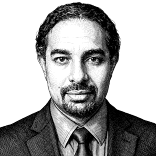
Ramez Naam
Ramez Naam (born 1973) is a computer scientist, futurist, and author known for his work on human enhancement technologies and science fiction exploring transhumanist themes. Born in Egypt and raised in the United States, Naam worked at Microsoft for over a decade, leading teams developing products including Internet Explorer. He holds nearly 20 patents related to search and machine learning. His nonfiction work More Than Human: Embracing the Promise of Biological Enhancement explores the potential of technology to enhance human capabilities. His Nexus trilogy of science fiction novels imagines a future where braincomputer interfaces create new forms of human connection and consciousness.

Ray Kurzweil
Raymond Kurzweil, born February 12, 1948, in Queens, New York, is an American inventor, futurist, and author who has been described as “the restless genius” by The Wall Street Journal. He graduated from MIT in 1970 with degrees in computer science and literature. Kurzweil is the principal inventor of numerous groundbreaking technologies, including the first CCD flatbed scanner, omnifont optical character recognition, the first printtospeech reading machine for the blind, the first texttospeech synthesizer, and commercially marketed largevocabulary speech recognition software. He has received the National Medal of Technology, was inducted into the National Inventors Hall of Fame, and holds 21 honorary doctorates. Kurzweil is best known for his writings on the technological singularity—the predicted moment when artificial intelligence will surpass human intelligence, leading to unprecedented transformation. His influential book The Singularity Is Near (2005) articulates his vision of humanity’s merger with technology, predicting this transformation will occur around 2045. Currently serving as a Principal Researcher and AI Visionary at Google, Kurzweil continues to shape our understanding of exponential technological change and its implications for human potential, making his work foundational to transhumanist philosophy.

Richard Dawkins
Richard Dawkins (born 1941) is a British evolutionary biologist and author. His books on evolution and the philosophy of science have had significant influence on public understanding of biology and the relationship between science and religion. Born in Nairobi, Kenya, Dawkins studied at Oxford and became its first Charles Simonyi Professor of the Public Understanding of Science. His book The Selfish Gene popularized the genecentered view of evolution and introduced the concept of memes. While known for his criticism of religion, Dawkins has acknowledged that the universe reveals “something stunningly close to the God of the physicists”—a deep structure and beauty that evokes awe. His engagement with questions of cosmic meaning continues to be relevant to discussions of science and transcendence.